

How does toxic stress impact mental health? MSU grad student receives grant to find out
March 20, 2026 - Shelly DeJong
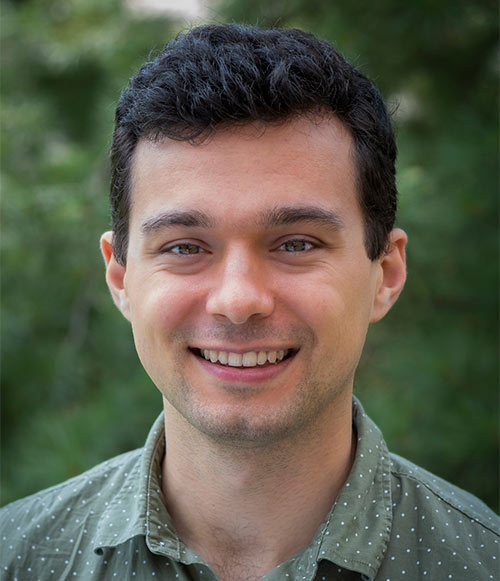 Congratulations to Christophe Delay a third-year graduate student in the Clinical Science research area in the MSU Department of Psychology, on being awarded a grant from the Blue Cross Blue Shield of Michigan Foundation for his project titled, “Real-Time Tracking of Toxic Stress Reactivity as a Target for Preventing Poor Mental Health.”
“It is always an honor to receive support for an area of research you really care about. It tells me that other people care about it too, and that this is a meaningful and important area of research,” said Delay. “I would like to personally thank the Blue Cross Blue Shield of Michigan Foundation for giving me the resources to pay participants for this project. Without their support, it would be much more difficult to gather the participants necessary to make this project a reality.”
Delay, who works in the Clinical Neuroscience Lab with advisor Dr. Katy Thakkar, is working to understand the stress mechanisms that are largely thought to result in the start of many mental health problems, like anxiety, depression, bipolar disorder, and schizophrenia, in college-aged students.
Recent reports have shown that a 49% national increase in daily stress over the last two decades has contributed to a 42% surge in rates of toxic stress in Michigan since 2019. As a direct result, over 30% of Michiganders now report symptoms of depression and anxiety.
“The need to intervene against toxic stress mechanisms is more important now than ever, and [toxic stress] affects almost everyone we know. If we can understand these dynamics a little more, we can make a big difference in mental health outcomes,” said Delay.
Toxic stress reactivity describes when the body’s natural stress response becomes intense or prolonged. When toxic stress reactivity is experienced repeatedly over time, it is thought to lead to cumulative wear and tear on the body and mind, leading eventually to poor mental and physical health.
Specifically, Delay is interested in how the autonomic nervous system, which controls the “fight or flight” response, interacts with people’s perception of the stressfulness of a situation to produce this toxic stress response. By clarifying the mechanisms underlying toxic stress, practitioners could better utilize existing interventions.
“College is a period of major life transitions, and it is typically the time when mental health problems first emerge. If we can understand how stress becomes toxic in college students, we can not only help prevent the onset of these problems but also set the stage for future research in other age groups,” said Delay.
If you’re interested in participating in this study, please feel free to reach out to Christophe Delay at stressstudymsu@gmail.com. Those interested in joining the study team can also reach out to discuss further.