

Students develop working technology for local businesses through College of Social Science AI Experiential Learning course
April 29, 2026
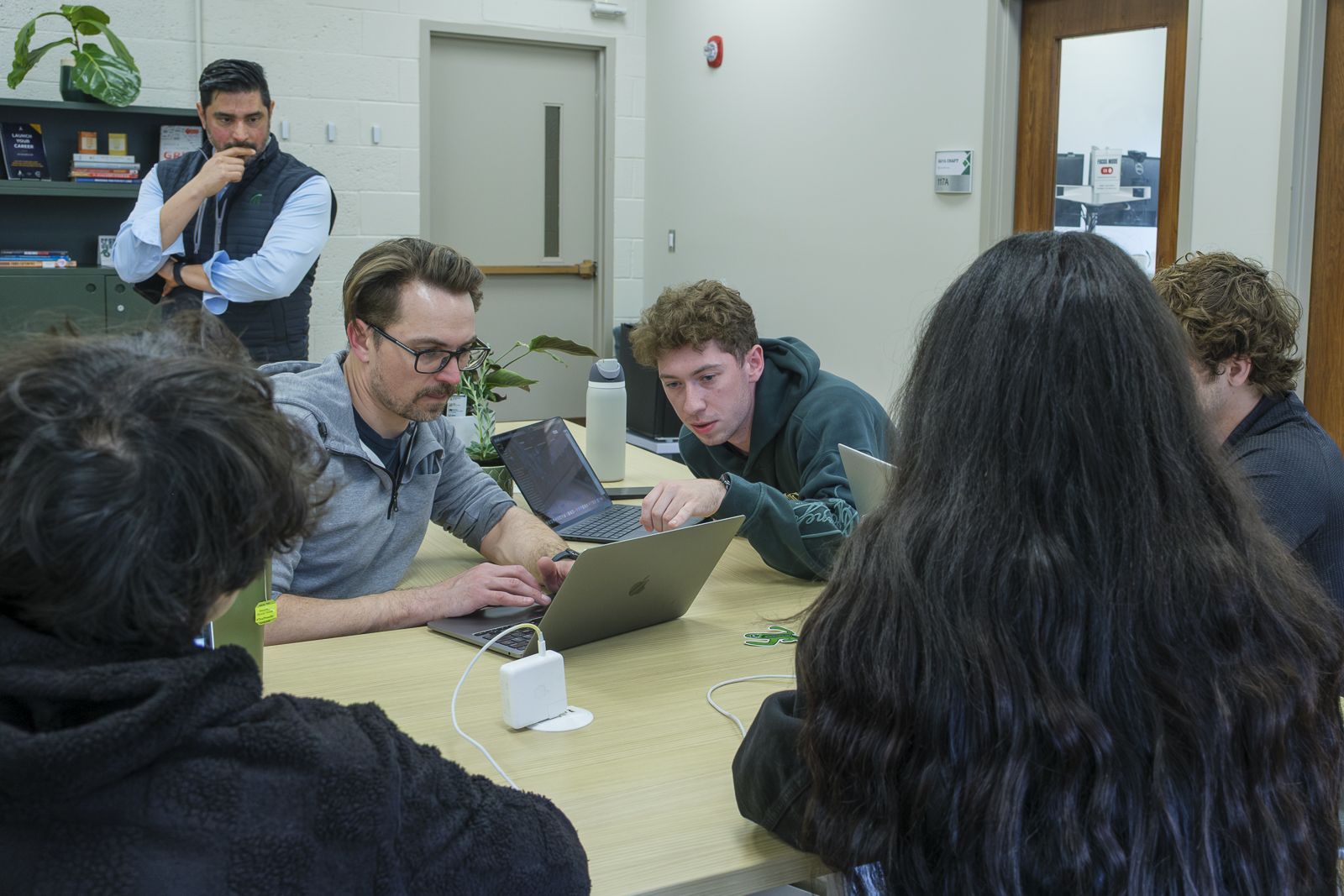
Photos by Jacqueline Hawthorne.
The College of Social Science debuted a new Experiential Learning course this spring: ‘AI Workflows & Organizational Intelligence,’ which teaches students to build real working Artificial Intelligence systems. Students worked throughout the semester with external business partners to build and deploy automated content for them to implement in their own businesses.
The concepts students focused on throughout the course also reflect the larger goals of the AI-Ready Spartans initiative, a branch of President Guskiewicz’s Green and White Council. It aims to build digital competencies by empowering faculty to lead the integration of AI across the undergraduate experience, while partnering with industry leaders to provide employer insights, with a goal of ensuring every graduate has ample opportunity to learn how to use AI effectively and responsibly.
The course was taught by Jesse Flores, owner of Lansing-based software company SuperWebPros, and guided students through a foundational knowledge of AI technology into hands-on system design, leaving them with the ability to develop their own AI-powered content automation systems for real-world application.
Flores wanted students to not only understand basic principles of AI-powered tools but be able to utilize them in a business setting by designing and deploying their own automated agents and workflows. From the start, he envisioned the course to be project-based rather than centered around lectures.
“I knew going into it that I did not want this to be me standing up and talking the whole time,” Flores said. “It’s been really fun to watch everybody learn how to build things and own something that they have produced. I’m also really excited that for many of the students here, they’ll be able to put something really practical and useful on their resumes.”
The experiential learning aspect of this course came from students in small groups being paired with real business partners in the Lansing area as ‘clients.’ Students worked throughout the semester based on initial client interviews conducted to assess the businesses’ wants and needs, ultimately providing them with a working AI content automation system and calendar of planned future content. Business partners visited the classroom at the end of the semester to formally evaluate each team and provide feedback.
The real-client structure raised the stakes in ways that transcend a traditional classroom experience. This style of project-based learning is a crucial element to the College of Social Science’s experiential learning courses, and each Social Science major is required to take a 3-credit course of this nature to graduate. The AI Workflows & Artificial Intelligence course creates a new option for a way to earn the experiential learning credit while discovering more about the ways artificial intelligence is transforming our world.
“SSC 490 is exactly the kind of course that reflects what MSU's AI-Ready Spartans initiative is about,” said Maya Craft, College of Social Science Director of Career Services. “These students are not just learning to use AI as a tool. They are learning to design AI agents and automate workflows, and that is the direction work is heading. Our job is to make sure our students are ready for it.”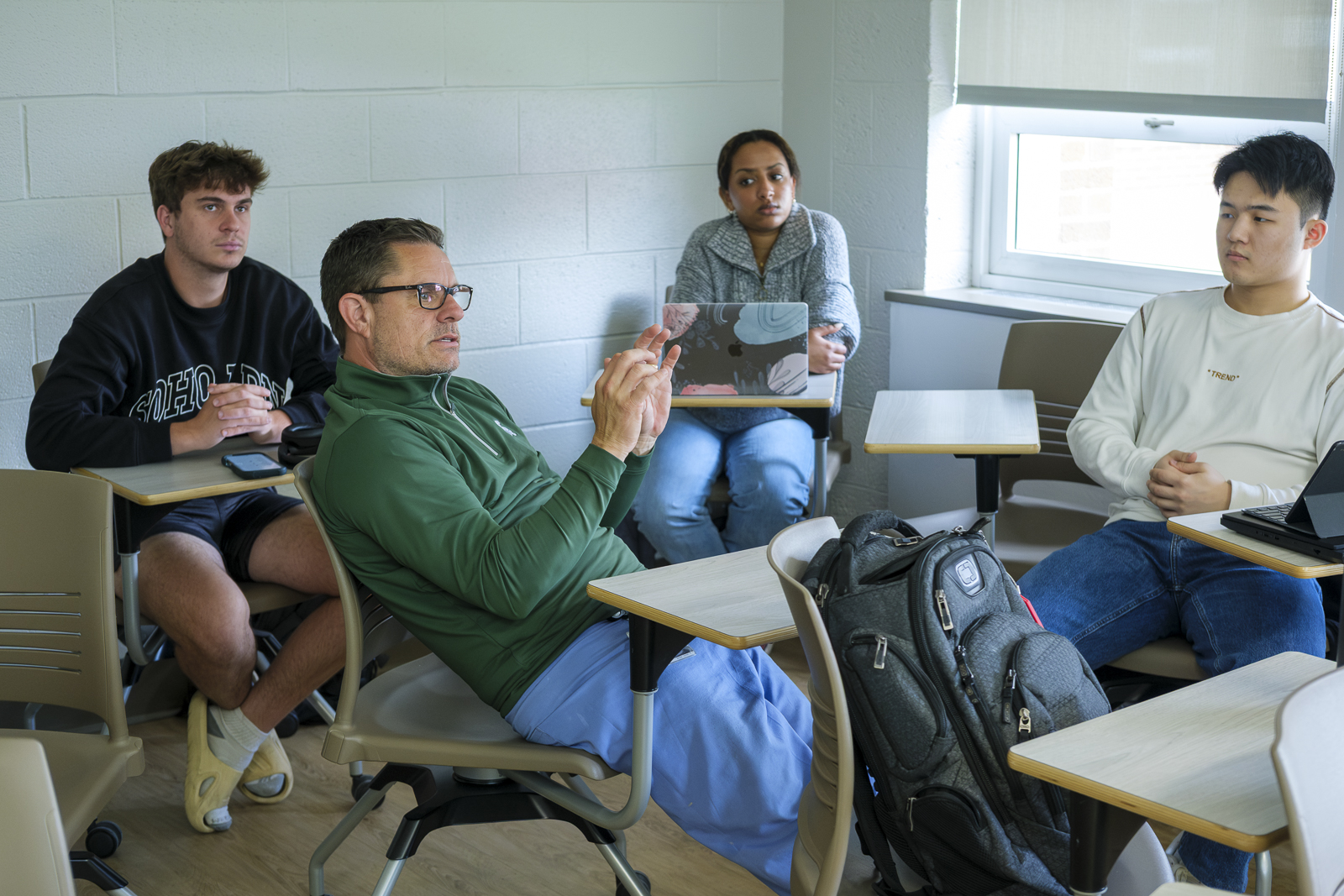 The course is designed to be more in-depth than a foundational AI skills course; it is a practical learning lab where students spend class sessions reviewing deliverables, learning new AI tools through live demonstrations and applying these skills in collaborative work sessions. Over the semester, they build and deploy their own automated pipelines using tools like N8N and Qdrant, progressing to the point where those systems can research, write and edit content on their own.
Triniti Halbedel, a Psychology major, was originally drawn to the course to learn more about the world of artificial intelligence. She found the partnership with local businesses to be a fulfilling aspect of the class that added an extra layer of professionalism and preparation for working in real-world business settings upon graduation.
“We had weekly deliverables that we produced for our partners, as well as meetings talking about what we’ve been working on, how we built it, and how it will aid in making their lives easier,” she said. “I love the feeling of accomplishment when we get to deliver what we’ve worked so hard to produce- things that range from reels created using AI to organizing our business partners’ content based on what they see as most important to their target audience, to ensure that the content is engaging to them.”
Fellow Psychology student Justin Favreau reflected on the value of constructive criticism and the ability to work cohesively with others, both skills that he sharpened throughout the semester in class. “I also believe that being able to move on from what’s not working is a great skill to have, one that I personally struggle with,” he added.
“Overall, I think that working with real clients was what really tied the course together for me,” Favreau said. “It felt like the work I was doing had a real impact, and I cared about the quality of what we were making and how much it accurately reflected the goals and message of the businesses.”
“Every single thing that students are creating, they are delivering their clients, and it’s a system that those clients will be able to use even after the course is over,” Flores said. “And to whatever extent the clients themselves or members of their teams will want to continue using it, this system will be self-perpetuating and scalable.”