

Access Torch: Benjamin Yoel
January 22, 2026 - Emily Jodway
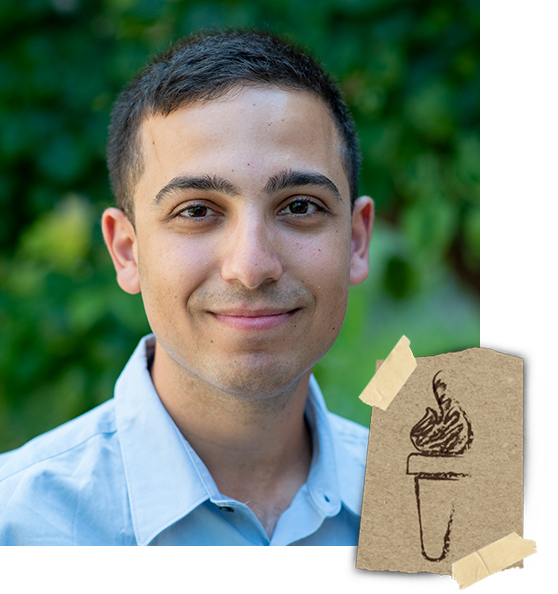 This January, the Office of Institutional Access recognizes Holocaust Remembrance Day, an international memorial day held each year on January 27 commemorating the victims of the Holocaust. We also spotlight members of our Michigan State University community that are doing research or work relevant to this month’s topic. Benjamin Yoel, a PhD candidate in the MSU Department of Political Science and a predoctoral fellow at the SNF Agora Institute at Johns Hopkins University. Yoel is a descendant of three Holocaust survivors, a facet of his family history that greatly influences his work.
Born and raised in Bangkok, Thailand, Yoel and his family moved to Tel Aviv, Israel when he was a teenager. Living in two different countries that were facing political strife and threats to their democracy greatly influenced his desire to study democracy and have a hand in defending it. “In particular, seeing large waves of people mobilize out onto the streets across these two contexts was particularly inspiring for me, and I wanted to better understand this phenomenon,” he says.
Politics and history have always been points of interest for Yoel. “I was always fascinated by politics and history,” he explains. “I fondly remember being six years old, sitting at the computer and reading about the histories of world leaders such as Anwar al-Sadat and Franklin Delano Roosevelt.” He earned his BA and MA in Government from Reichman University in Herzliya, Israel, studying Middle Eastern politics and Conflict Studies.
Yoel knew that he wanted to pursue earning his PhD in the United States, given his growing interests in authoritarian politics and political violence. After lots of research, he chose Michigan State and its Department of Political Science. He saw the potential to learn from several scholars who could serve as both mentors and collaborators. “I was particularly drawn to Michigan State because of Professor Erica Frantz, a leading scholar of authoritarian politics, as well as Professor Michael Wahman, who specializes in democracy and has worked extensively with graduate students,” Yoel said.
While earning his PhD at MSU, Yoel continued to dive into research focused on authoritarian regimes, taking an independent study class with Professor Frantz. “She had me read works on opposition politics and nonviolent resistance, and through these readings, I discovered I was most interested in understanding when and why these movements succeed and are able to court public support for their cause.”
Benjamin's main research areas include democratic backsliding, political violence, nonviolent resistance, and authoritarian politics. His dissertation project examines the causes and consequences of opposition to democratic backsliding, both in the Middle East and globally.
Yoel’s research also frequently intersects with current affairs in Israel. He has conducted both surveys and in-depth interviews in the country with activists, journalists, and politicians. “By shedding light on the dynamics of politics in Israel and situating it in a comparative perspective, I hope to show that scholars and practitioners can draw critical insights from the Israeli case on democratic governance, democratic erosion, and public opinion globally,” he explained.
Against all odds, Yoel’s grandparents survived the Holocaust in Romania and Poland. His maternal grandfather’s journey in particular is an inspiration to Yoel. He was able to survive the war thanks to Oskar Schindler by working in one of his factories as a carpenter. Despite being unable to attend high school due to the outbreak of war, Yoel describes his grandfather as one of the smartest people he has ever known- he spoke six languages. “Their survival story is another contributing factor to my desire to study opposition politics and the defense of democracies,” he says. “It reminds me daily of the importance of democracy, as well as the danger that the rise of authoritarian regimes can carry for citizens.”
Yoel sees Holocaust Remembrance Day as an important moment of recognition, especially prevalent in an era that has seen a rise in antisemitism, the spread of misinformation and disinformation, and even the mainstreaming of outright Holocaust denial.
“Preserving the memory of the Holocaust becomes ever more essential, not only to honor victims, but also to remind future generations of the consequences democratic breakdown and authoritarianism can have.”
Honorees’ views are their own and do not necessarily reflect those of the College of Social Science.
Read more:
Access Champion
Faculty/Staff
Dr. Matthew Pauly
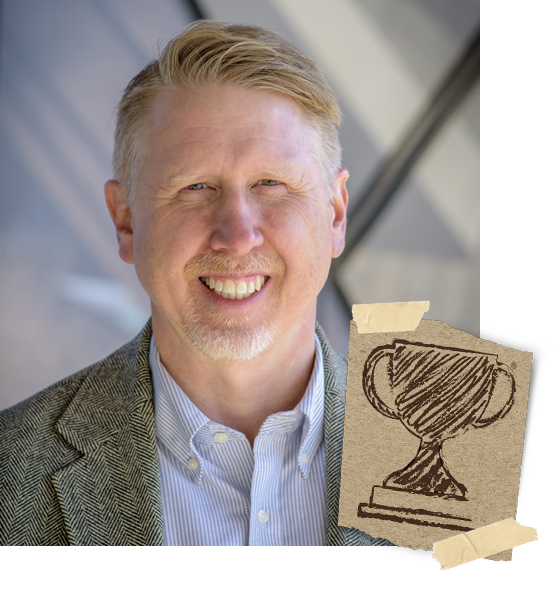
Dr. Matthew Pauly is a scholar of language, nationalism, and Jewish identity in 1920s–1930s Soviet Ukraine whose work preserves histories essential to our collective memory.
Access Spotlight
Alumni
Harry Smith
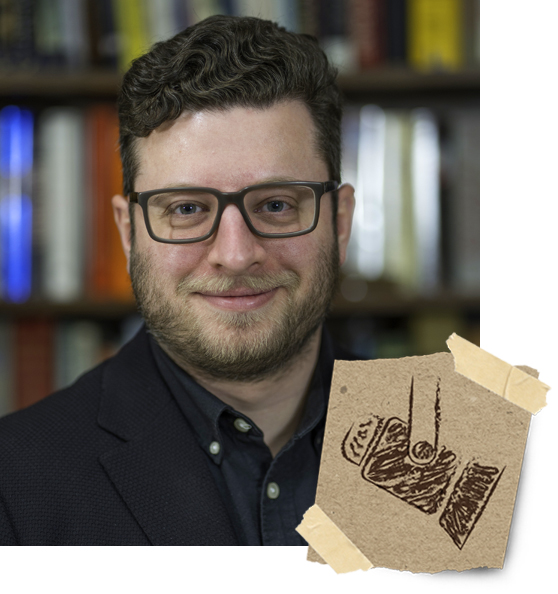
Harry Smith is an alum of Michigan State University’s History Department. He is currently the Senior Education Program Manager at The Zekelman Holocaust Center.

Access Matters
We strive to cultivate an inclusive and welcoming college environment that celebrates a diversity of people, ideas, and perspectives.