

Access Champion: Dr. Matthew Pauly
January 22, 2026 - Emily Jodway
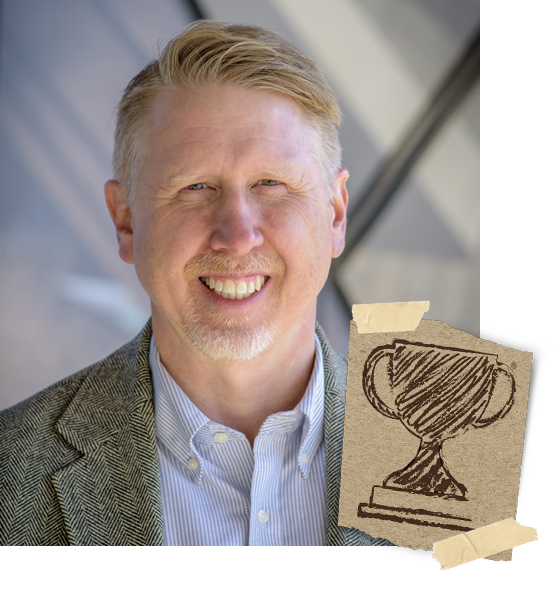 This January, the Office of Institutional Access recognizes Holocaust Remembrance Day, an international memorial day held each year on January 27 that commemorates the victims of the Holocaust. We also put a spotlight on members of our Michigan State community that are doing research or work relevant to this month’s topic. Dr. Matthew Pauly is one such individual. Pauly is an Associate Professor of History and is affiliated with the Center for European and Eurasian Studies, Peace and Justice Studies and The Michael and Elaine Serling Institute for Jewish Studies and Modern Israel.
Pauly is a highly experienced researcher of Ukraine whose interest in Eastern Europe was cultivated early on when he was living in then-West Berlin as a child. He was able to travel throughout Europe and was exposed to the socialist world. “There’s just layers upon layers of history in Europe to find,” he said.
In high school, this interest was furthered by a teacher who had a fascination with communism and organized a class trip to the Soviet Union, including the Russian and Ukrainian republics. During his time as an undergrad at Northwestern, he continued his focus on history, international relations and Russian, and studied abroad in Moscow in 1991, the final year of the Soviet Union.
Pauly received more exposure to Ukrainian history and culture both by studying Russian language in college alongside students from Ukraine, and while earning his PhD at Indiana. He quickly learned that investigating the history of the Soviet Union necessitated knowledge about more than just Russia, and described Indiana as having a history of ‘decolonizing’ Russian history that aided in this. He studied Polish and Lithuanian at Indiana and Ukrainian at Harvard. He began a tenure-stream position at Michigan State in 2009.
“I really believe in trying to understand the present through the prism of history,” Pauly says. This reflects in both his personal beliefs and philosophy around teaching. His perspective as an educator is also greatly influenced by a State Department fellowship working in the political section of the US Embassy in Kyiv, Ukraine. “I don’t think any good diplomat, or any student of international relations, can study or do their work properly without a historically grounded understanding of the world in which they inhabit,” he says.
Pauly sees his work as fulfilling a duty of both educating and dispelling misinformation. This is especially prevalent for him since the outbreak of the war in Ukraine in 2014 and Russia’s full-scale invasion in 2022. Being a specialist on the topic of Ukraine, he has fielded countless media inquiries in the years since, and is driven to speak out about how Russia is “Using things about the history of the Holocaust and Second World War to weaponize history and propaganda against Ukraine.”
“I believe it’s a moral obligation on my part that people get the history right and don’t fall victim to disinformation,” he said. “I also feel like I have a moral obligation to the countless individuals who enabled me to have this career. I wouldn’t be at Michigan State without the help of mostly Ukrainian historians, librarians and archivists.”
Key to understanding this idea, Pauly says, is recognizing that Ukraine has a rich culture and history of independence prior to this time. Despite Russian still being broadly spoken in Ukraine, the Russian army has been indiscriminate in its attacks, and in some cases targeting, primarily Russian-speaking areas of the country.
“Many of the soldiers serving in the Ukrainian army are Russian speakers,” he added. “Some of them are ethnic Russians fighting for a civic homeland that they view as Ukraine. That’s their homeland, regardless of their ethnicity. I want people to disentangle the issues of language use and ethnicity and citizenship.”
Pauly’s research and teaching also intersect with Jewish identity and history in Europe. He teaches a survey course on the history of World War II and a seminar on nationalism and national identity that emphasizes the experiences of non-Russians, including Jews. His classes on Soviet history and Eastern European history also integrate Jewish history.
He has published on the 1919 anti-Jewish pogroms in the former Russian Empire and on native language schooling in Soviet Ukraine in the 1920s, when communists utilized both the Ukrainian and Yiddish languages to further legitimize Soviet rule and raise the first generation of communists. His most recent work looks at abandoned street children growing up in Odesa, Ukraine, a great number of whom were Jewish and fell under the care of Jewish philanthropic organizations in the late imperial period. He has also been researching in Warsaw on the role of Jewish doctors in interwar Poland.
Tragedies like the war in Ukraine can bring to mind other troubling times in recent history, such as the countless lives lost during World War II and the Holocaust. He draws parallels between the former and what is happening now, as Russian forces in occupied areas of Ukraine are forbidding the use of the Ukrainian language and instruction of Ukrainian history. This, and yearly recognitions like Holocaust Remembrance Day, can serve as reminders to us of the vicious cycles history can repeat if we do not intervene.
“The Holocaust teaches us that initially discriminate acts may take on violent forms, and to be wary of this danger,” he says. “It also simply tells us something about the capacity of evil that exists among certain state powers, that can then use their military prowess to direct mechanisms of death against civilian populations. I think that’s a lesson we should be mindful of as well.”
Honorees’ views are their own and do not necessarily reflect those of the College of Social Science.
Read more:
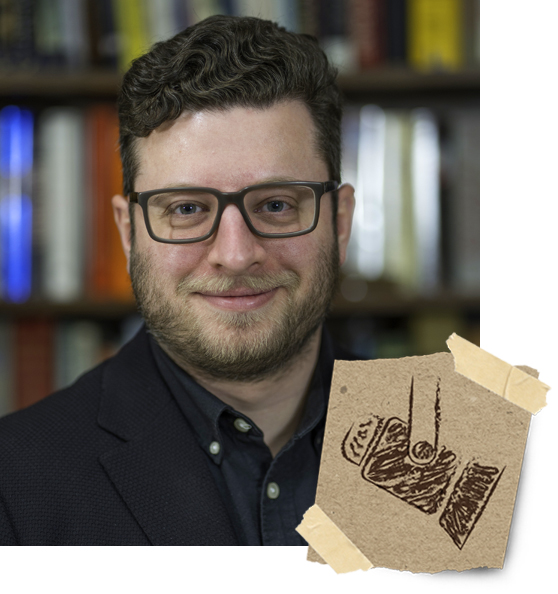
Access Spotlight
Alumni
Harry Smith
Harry Smith is an alum of Michigan State University’s History Department. He is currently the Senior Education Program Manager at The Zekelman Holocaust Center.
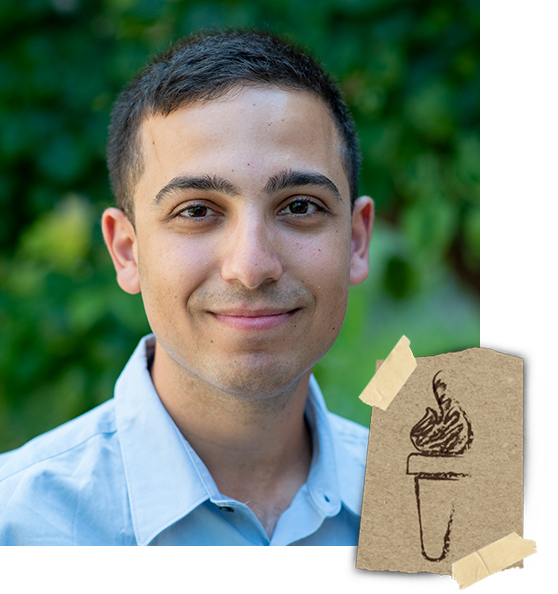
Access Torch
Student
Benjamin Yoel
Benjamin Yoel received his MS in Political Science and is presently a PhD candidate studying Israeli Politics.

Access Matters
We strive to cultivate an inclusive and welcoming college environment that celebrates a diversity of people, ideas, and perspectives.