

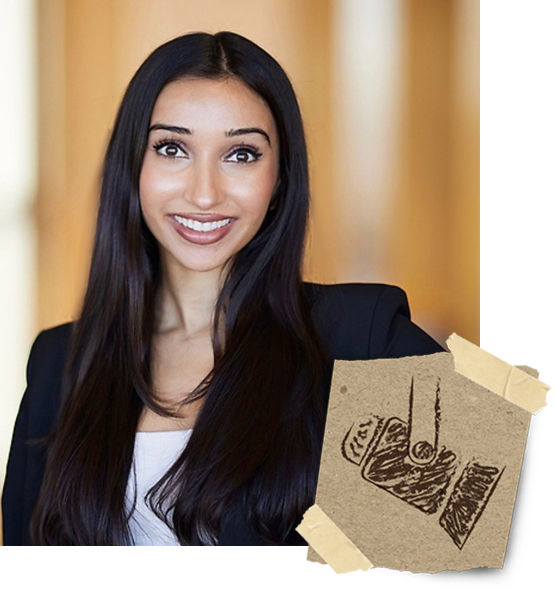
Access Spotlight: Isha Abbasi
April 20, 2026 - Emily Jodway
 This April, we recognize Arab American Heritage Month and the many contributions and achievements of Arab Americans in the past and present. We also spotlight members of the Michigan State community who hold this proud heritage or are doing work that advances the lives of these individuals.
Isha Abbasi is our Access Spotlight for April and a 2017 graduate of Michigan State. Abbasi majored in Community Governance and Advocacy through the Center for Integrative Studies in Social Science and earned her Doctorate of Law from the University of Michigan in 2022.
Abbasi and her family came to the United States from Pakistan when she was young and have lived in Lansing ever since. Abbasi comes from a family of Spartans; her sisters all went to MSU and her mother worked there, all of which were motivators for her to attend herself. She originally thought about majoring in psychology and was influenced by her mother’s career in psychiatry and involvement with Muslim and minority mental health initiatives. She was also raised up to be community service oriented, something that stayed with her throughout her childhood and factored into her degree decision.
“Our religion strongly encourages charity and public service,” Abbasi added. “My mother’s advice to us was to recognize our talents and use them to serve others.”
Abbasi eventually decided that her own skills lay not in medicine but in public interest and jurisprudence. “I was always a good writer, I enjoyed debate, so the legal world seemed like the place where my skillset made the most sense and how I could be a resource to my community,” she explained.
On the advice of her sister, she majored in Interdisciplinary Studies and built a foundation of knowledge in sociology, political science, and history, with a goal of attending law school after undergrad. She participated in a study away program in Washington D.C. with Representative Debbie Dingell’s office and an internship with the Lansing Mayor’s Office. Along the way, she was mentored and motivated by her advisor, Veda Hawkins.
“Interdisciplinary studies gave me the foundation to understand how different forces interact to shape our systems. This multidisciplinary lens made me a better lawyer who can approach problems from competing perspectives and understand their broader implications,” she said. “I had so many incredible opportunities through the College of Social Science and this multi-faceted major, and went into law school with a very diverse set of skills and interests.”
Abbasi’s curriculum in the College of Social Science at times were reflections of her own experiences growing up away from the rest of her family and culture in Pakistan. While her family found community within the Muslim community in Lansing, Abbasi often found herself leaning on her parents and sisters for support. “It helped me to grow up with a deep sense of empathy for what it’s like to move through spaces where you do not always feel understood or represented,” she said. “And as a Social Science student, you learn how different societal structures give advantage to some groups while creating barriers for others. That awareness has shaped my commitment to addressing those inequities and advocating for marginalized communities.”
While in law school, Abbasi worked with the University of Michigan Juvenile Justice Clinic and served on the Lawyer’s Committee for Better Housing. Her first job after graduating was with the Jenner & Block law firm, in part because she had learned about the opportunities for pro bono work in addition to work with commercial business litigation and investigations.
Abbasi worked with the Arab American Civil Rights League of Illinois filing humanitarian parole petitions for individuals in Gaza in immediate need of aid. She also worked on a number of asylum cases with individuals seeking refugee status. One particular case that has stuck with her was her work with an Egyptian woman fleeing Egypt facing threats as a persecuted minority.
“It was so fulfilling, being able to work with her,” Abbasi said. “Being a refugee from Egypt, and a woman, she had gone through so much, and felt much more comfortable when she had a woman who looked like her to talk about those experiences with. I really value getting to be a friendly face in those environments that might feel alienating to certain communities.”
These situations, and Abbasi’s own background, all serve as examples of the different ways that individuals come to call America home and contribute to our wealth of cultural backgrounds. “Having grown up here, I feel very American, but I’ve been able to hold on to a lot of my culture,” Abbasi said. “I think that’s a really beautiful thing, and a testament to my family making sure that we’ve held on to that sense of identity.”
“This country is shaped by its rich cultures and communities, each of which contribute to the fabric of this nation. It’s important to uplift those communities and ensure they have the support to truly thrive.”
Honorees’ views are their own and do not necessarily reflect those of the College of Social Science.
Read more:
Access Champion
Faculty/Staff
Kari Kammel
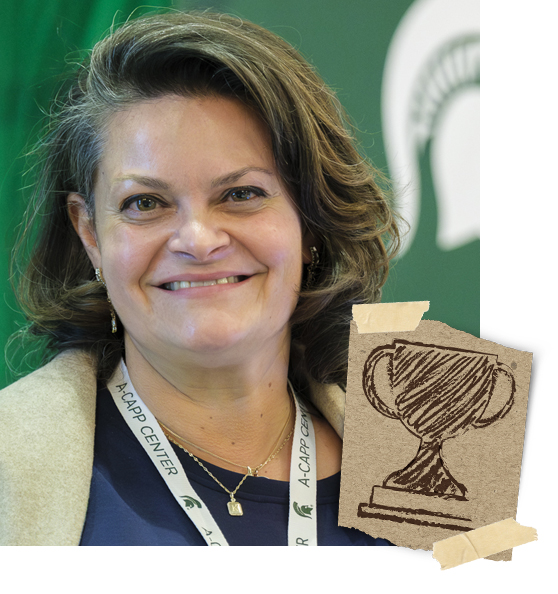
Kari Kammel is the Director of the Center for Anti-Counterfeiting and Product Protection (A-CAPP) at Michigan State University, where she leads the center’s research, education, and outreach initiatives and oversees its Industry Advisory Board and four brand protection councils.
Access Torch
Student
Jessica Saba
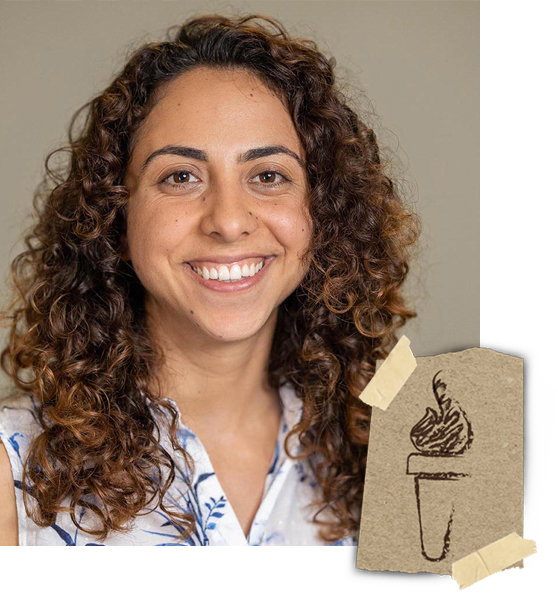
Jessica Saba is a PhD candidate in the School of Social Work whose research focuses on advancing health equity among the Middle East and North Africa population and stories of resilience in Palestine.

Access Matters
We strive to cultivate an inclusive and welcoming college environment that celebrates a diversity of people, ideas, and perspectives.