Jump to HeaderJump to Main ContentJump to Footer
Michigan State University
College of Social Science
  • Future Students
  • Undergraduate
  • Graduate
  • Degrees
  • Directory
  • Give

College of Social Science

  • Academics
    • Overview
    • Majors, Degrees & Programs
    • Undergraduate
    • Graduate
    • Advising
    • Career Development
    • Scholarships
    • Study Abroad/Away & Internships
    future-students

    Future Student Information

    Your future begins here
  • |
  • Research
    • Overview
    • Centers, Institutes & Programs
    • Faculty Initiatives Fund
    • Forms & Resources
    • Research Committee
  • |
  • Faculty & Staff
    • Overview
    • Policies & Forms
    • RPT Process
    • Support Student Careers
    • PAL Program
    • Services & Assistance
  • |
  • Alumni
    • Giving Opportunities
    • Career Development Assistance
    • Volunteer Opportunities
    • Alumni Awards
    • Blanchard Public Service Forum
    WLI-2-800w

    Learn about the WLI

    Visit Women's Leadership Institute
  • |
  • News
  • |
  • Events
  • |
  • Access
    • Overview
    • Dean's Research Associates (Postdoc) Program
    • Dean’s Institutional Access Small Grant Program
    • Access Accolades
    • Belonging Gatherings
    • Dean's Distinguished Senior Scholars Program
    • Dean’s Institutional Access Fellows Program
    • Advisory Committee
    essentials-corner

    Essentials Corner

    View Essentials Corner
  • |
  • About
    • Overview
    • Dean's Office
    • Leadership
    • Directory
    • College Awards
    • Contact Us
College of Social Science
  • Academics
  • Research
  • Faculty & Staff
  • Alumni
  • News
  • Events
  • Access
  • About

< Academics

  • Overview
  • Majors, Degrees & Programs
  • Undergraduate
  • Graduate
  • Advising
  • Career Development
  • Scholarships
  • Study Abroad/Away & Internships
future-students

Future Student Information

Your future begins here

< Research

  • Overview
  • Centers, Institutes & Programs
  • Faculty Initiatives Fund
  • Forms & Resources
  • Research Committee

< Faculty & Staff

  • Overview
  • Policies & Forms
  • RPT Process
  • Support Student Careers
  • PAL Program
  • Services & Assistance

< Alumni

  • Giving Opportunities
  • Career Development Assistance
  • Volunteer Opportunities
  • Alumni Awards
  • Blanchard Public Service Forum
WLI-2-800w

Learn about the WLI

Visit Women's Leadership Institute

< News

< Events

< Access

  • Overview
  • Dean's Research Associates (Postdoc) Program
  • Dean’s Institutional Access Small Grant Program
  • Access Accolades
  • Belonging Gatherings
  • Dean's Distinguished Senior Scholars Program
  • Dean’s Institutional Access Fellows Program
  • Advisory Committee
essentials-corner

Essentials Corner

View Essentials Corner

< About

  • Overview
  • Dean's Office
  • Leadership
  • Directory
  • College Awards
  • Contact Us
  • Future Students
  • Undergraduate
  • Graduate
  • Degrees
  • Directory
  • Give

Academics

  • Majors, Degrees & Programs
  • Advising
  • Scholarships
  • Experiential Learning
  • Student Success & Help Rooms
  • Career Development
  • Graduate
  • Future Students
  • Professional Licensure and Certification

Faculty & Staff

  • Policies & Forms
  • Reappointment, Promotion, & Tenure
  • Services & Assistance
  • PAL Program
  • Support Student Careers

Research

  • Centers, Institutes & Programs
  • Faculty Initiatives Fund
  • Forms & Resources
  • Research Committee

Access

  • About
  • Advisory Committee
  • Dean's Research Associates (Postdoc) Program
  • Dean's Fellows Program
  • Senior Scholars Program
  • Small Grants Program
  • Access Matters Accolades
  • Essentials Corner
  • Belonging Gatherings

Alumni

  • Giving Opportunities
  • Volunteer Opportunities
  • Career Development Assistance
  • Blanchard Forum
  • Alumni Awards

About

  • College Awards
  • Contact
  • Dean's Office
  • Directory
  • Leadership
  • Procedures & Codes

Contact us

(517) 355-6676

Address

Berkey Hall 509 E Circle Dr East Lansing, MI 48824

Follow Us

  • Visit our Facebook page
  • Visit our page on X
  • Visit our Instagram page
  • Visit our LinkedIn page
  • Visit our YouTube page

If you're having accessibility issues, please let us know.

Know MoreTransparency Reporting: Budget & Salary/Compensation
  • Contact Information|
  • Site Map|
  • Privacy Statement|
  • Site Accessibility|
  • Call MSU: (517) 355-1855|
  • Visit: msu.edu|
  • Notice of Nondiscrimination|

SPARTANS WILL|© Michigan State University|

Research

March 3, 2025

Can we train empathy? MSU Researcher explores the science behind bridging social divides

Brandon Drain

irish-kathryn-still-5


Empathy is often seen as the foundation of social connection, but understanding how it works remains a challenge.

In an era of deepening ideological division, Kathryn Irish, a doctoral researcher at Michigan State University’s School of Social Work, is exploring the neural basis of empathy and its role in bridging political and social differences.

Empathy is central to all helping professions, especially social work, and ideas about empathy are reflected in powerful social and civic institutions, according to researchers. Yet even though empathy is amongst the most highly researched subjects in all human history, there are few examples of findings being translated in ways that address real problems or improve quality of life, Irish explained.

“The biggest misconception is that [empathy] can't do anything, that it's powerless,” said Irish. Since its inception, empathy has been inexorably linked to morality, ethics, and virtue, she continued.

"The presence, or absence, of empathy in one’s personality or behavior has become misnomer for one’s individual morality—an inference of one’s social value,” said Irish.

Ideas about empathy can also grant power, often granting moral or material authority to figures like politicians or religious leaders. It can also strip power, often used to justify carceral systems by falsely claiming people who commit crimes ‘lack empathy’, which is inaccurate, according to Irish.

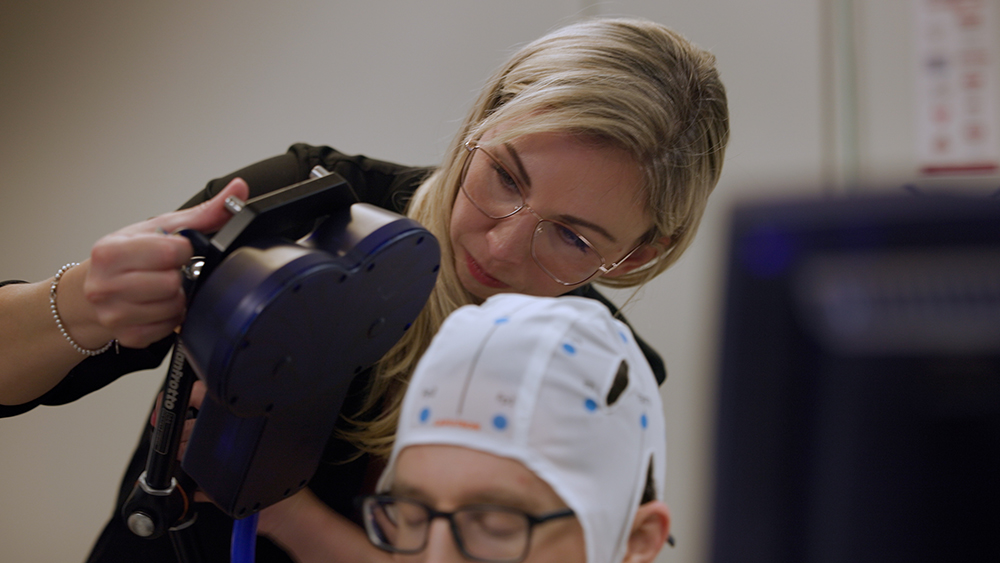
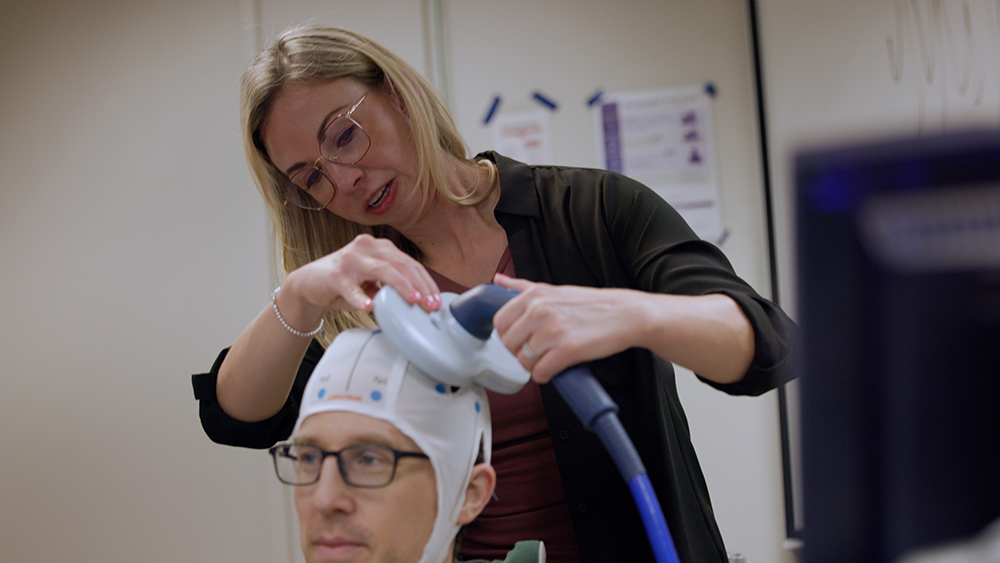
At the heart of Irish’s research is a technique called transcranial magnetic stimulation (TMS). TMS is a non-invasive way to stimulate specific areas of the brain that aids in understanding how different regions contribute to our thoughts, behaviors, and emotions. Irish and her team focus on a region called the dorsolateral prefrontal cortex (DLPFC)—a key part of the brain involved in decision-making, emotion regulation, and social reasoning, according to researchers.

irish-kathryn-still-1

According to Irish, depressive symptoms are associated with decreased activity in the left DLPFC (hypoactive left DLPFC) and over-activity of the right DLPFC (hyperactive right DLPFC). Applying low-frequency TMS to the right DLPFC can temporarily inhibit its activity, restoring balance to the entire DLPFC network.

Further, “improved cognitive functions facilitated by low-frequency TMS to right side DLPFC include improved ‘Theory of Mind (ToM)/cognitive empathy—specifically, the ability to infer the mental status of another,” Irish explained. This infers that subjects who have their right DLPFC suppressed can enhance their executive functioning and improve cognitive empathy.

“We predict that enhanced executive functioning will increase a persons’ cognitive and affective and resonance with the simulated character which will increase the person’s willingness to help a stranger,” said Irish.

Although still in the early stages, Irish’s research could contribute to interventions that foster empathy, reduce polarization, and improve diplomacy. If successful, this research could inform new approaches to conflict resolution, education, and even clinical interventions for individuals struggling with empathy disorders.

At a time when ideological polarization is at an all-time high, these insights could be a crucial step toward bridging societal gaps.
Research