Jump to HeaderJump to Main ContentJump to Footer
Michigan State University
College of Social Science
  • Future Students
  • Undergraduate
  • Graduate
  • Degrees
  • Directory
  • Give

College of Social Science

  • Academics
    • Overview
    • Majors, Degrees & Programs
    • Undergraduate
    • Graduate
    • Advising
    • Career Development
    • Scholarships
    • Study Abroad/Away & Internships
    future-students

    Future Student Information

    Your future begins here
  • |
  • Research
    • Overview
    • Centers, Institutes & Programs
    • Faculty Initiatives Fund
    • Forms & Resources
    • Research Committee
  • |
  • Faculty & Staff
    • Overview
    • Policies & Forms
    • RPT Process
    • Support Student Careers
    • PAL Program
    • Services & Assistance
  • |
  • Alumni
    • Giving Opportunities
    • Career Development Assistance
    • Volunteer Opportunities
    • Alumni Awards
    • Blanchard Public Service Forum
    WLI-2-800w

    Learn about the WLI

    Visit Women's Leadership Institute
  • |
  • News
  • |
  • Events
  • |
  • Access
    • Overview
    • Dean's Research Associates (Postdoc) Program
    • Dean’s Institutional Access Small Grant Program
    • Access Accolades
    • Belonging Gatherings
    • Dean's Distinguished Senior Scholars Program
    • Dean’s Institutional Access Fellows Program
    • Advisory Committee
    essentials-corner

    Essentials Corner

    View Essentials Corner
  • |
  • About
    • Overview
    • Dean's Office
    • Leadership
    • Directory
    • College Awards
    • Contact Us
College of Social Science
  • Academics
  • Research
  • Faculty & Staff
  • Alumni
  • News
  • Events
  • Access
  • About

< Academics

  • Overview
  • Majors, Degrees & Programs
  • Undergraduate
  • Graduate
  • Advising
  • Career Development
  • Scholarships
  • Study Abroad/Away & Internships
future-students

Future Student Information

Your future begins here

< Research

  • Overview
  • Centers, Institutes & Programs
  • Faculty Initiatives Fund
  • Forms & Resources
  • Research Committee

< Faculty & Staff

  • Overview
  • Policies & Forms
  • RPT Process
  • Support Student Careers
  • PAL Program
  • Services & Assistance

< Alumni

  • Giving Opportunities
  • Career Development Assistance
  • Volunteer Opportunities
  • Alumni Awards
  • Blanchard Public Service Forum
WLI-2-800w

Learn about the WLI

Visit Women's Leadership Institute

< News

< Events

< Access

  • Overview
  • Dean's Research Associates (Postdoc) Program
  • Dean’s Institutional Access Small Grant Program
  • Access Accolades
  • Belonging Gatherings
  • Dean's Distinguished Senior Scholars Program
  • Dean’s Institutional Access Fellows Program
  • Advisory Committee
essentials-corner

Essentials Corner

View Essentials Corner

< About

  • Overview
  • Dean's Office
  • Leadership
  • Directory
  • College Awards
  • Contact Us
  • Future Students
  • Undergraduate
  • Graduate
  • Degrees
  • Directory
  • Give

Academics

  • Majors, Degrees & Programs
  • Advising
  • Scholarships
  • Experiential Learning
  • Student Success & Help Rooms
  • Career Development
  • Graduate
  • Future Students
  • Professional Licensure and Certification

Faculty & Staff

  • Policies & Forms
  • Reappointment, Promotion, & Tenure
  • Services & Assistance
  • PAL Program
  • Support Student Careers

Research

  • Centers, Institutes & Programs
  • Faculty Initiatives Fund
  • Forms & Resources
  • Research Committee

Access

  • About
  • Advisory Committee
  • Dean's Research Associates (Postdoc) Program
  • Dean's Fellows Program
  • Senior Scholars Program
  • Small Grants Program
  • Access Matters Accolades
  • Essentials Corner
  • Belonging Gatherings

Alumni

  • Giving Opportunities
  • Volunteer Opportunities
  • Career Development Assistance
  • Blanchard Forum
  • Alumni Awards

About

  • College Awards
  • Contact
  • Dean's Office
  • Directory
  • Leadership
  • Procedures & Codes

Contact us

(517) 355-6676

Address

Berkey Hall 509 E Circle Dr East Lansing, MI 48824

Follow Us

  • Visit our Facebook page
  • Visit our page on X
  • Visit our Instagram page
  • Visit our LinkedIn page
  • Visit our YouTube page

If you're having accessibility issues, please let us know.

Know MoreTransparency Reporting: Budget & Salary/Compensation
  • Contact Information|
  • Site Map|
  • Privacy Statement|
  • Site Accessibility|
  • Call MSU: (517) 355-1855|
  • Visit: msu.edu|
  • Notice of Nondiscrimination|

SPARTANS WILL|© Michigan State University|

Research

March 24, 2025

From Michigan to Louisiana, a behavioral health psychologist listens to rural communities

Shelly DeJong

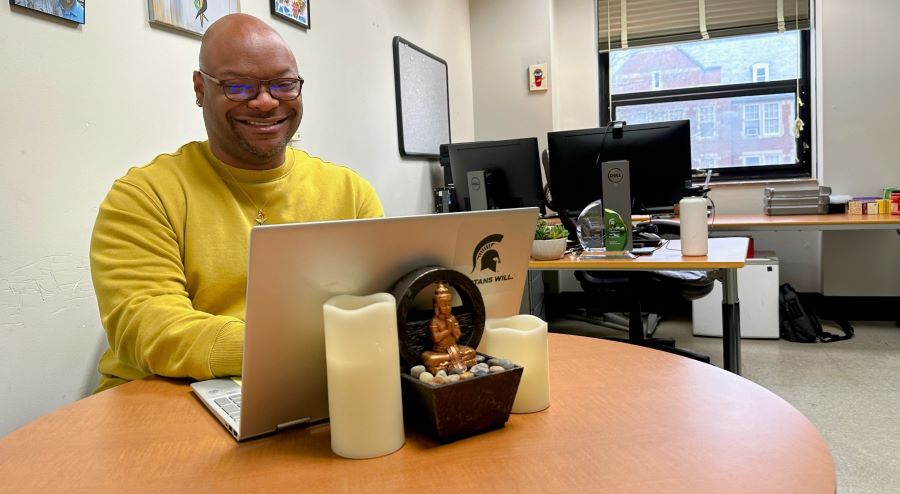
kas-anderson-office-web


What voices aren’t being heard in research? 

If you’ve worked with Dr. Kaston Anderson Jr., you have likely heard this question.  Anderson, an associate professor of psychology, focuses on communities that do not have adequate access to services and who are often excluded socially, economically or politically. This could include, for example, a rural community where the nearest hospital might be 50 miles away. If a person doesn’t have adequate transportation, they may not be able to get medical or mental health services. 

“These individuals deserve to have their voices heard in research and the scientific community as well,” Anderson says. “I’m a firm believer that everyone is an expert in their own lived experience.” 

As a behavioral psychologist, Anderson studies social determinants of health—or in other words, the conditions that we’re born into, what we grew up in, that we live and work in. This also includes social norms, laws, and policies that can influence the neighborhoods and conditions that we live in.  

Having grown up in a very rural part of Louisiana, Anderson saw firsthand how communities are getting missed. This has fueled his work as a researcher. 

Pollution, injustices, and health in rural Louisiana 
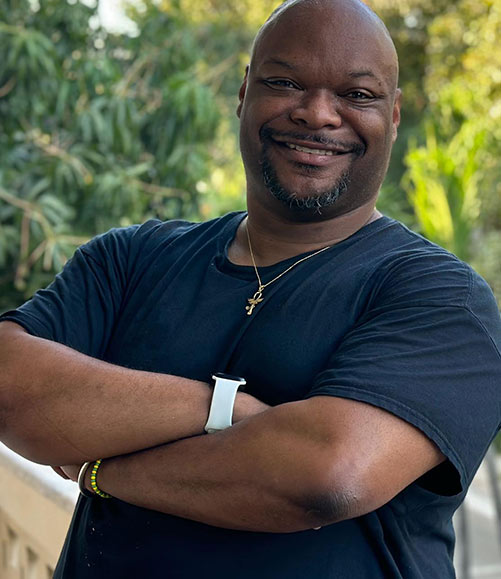
kas-anderson-updated-dir2024

One major project of Anderson is scientifically studying the impact of air pollution and social determinants of health on cognitive well-being and quality of life for older Black Americans in rural Louisiana. Thanks to funding from MSU’s Tetrad Initiative for Interdisciplinary Research, he is conducting this research with Dr. Norman Scheel (Department of Radiology) and Dr. Masako Morishita (Department of Family Medicine). 

This stretch of Southeast Louisiana has long been known as Cancer Alley. Many residents in this area have been diagnosed with cancer at a significantly higher rate compared to other geographic areas. Black American residents also deal with the added toll of historical segregation and other social inequities.    

The team of researchers will use cognitive, behavioral, and environmental assessments to measure cognitive decline, behavioral risk and protective factors, toxic metal data, water toxicity levels, and indoor air quality. Physiological measures of blood oxygen saturation will be used as well. Qualitative interviews will be conducted with 60 participants to examine the lived experiences of older adults living in air-polluted environments. 

Alzheimer's disease risk in rural Michigan 

Thanks to a grant from the Michigan Alzheimer’s Disease Research Center, Anderson is also studying the impact of social determinants of health on Alzheimer’s disease risk in Michigan.  

His team will be examining different trajectories for people across racial/ethnic backgrounds, income levels, education attainment, and location. He will look to see how those things together and separately impact people living with Alzheimer’s disease. In addition, his team will study how other factors, including social determinants of health, COVID-related healthcare, discrimination, and social relationships affect mental health conditions in people living with Alzheimer’s disease. 

“I’m fortunate to have received funding to study both of these projects,” said Anderson. “Being able to study social detriments in two different geographic contexts will help tell a more comprehensive story of how these non-medical factors affect health and well-being.” 

Belief in the citizen scientist 

As a firm believer in the citizen scientist, Anderson and his lab works to empower community members to collect data themselves and be able to draw conclusions based on the data that they collect.  

“Historically, researchers would parachute into and out of marginalized communities, which would make them feel even more exploited. My lab and I work with communities, not just in communities,” said Anderson. “When I work with communities, even the 85-year-old grandmother learns how to look at charts and tables and draw conclusions on the data.” 

Working with communities allows for community buy-in, which is critical for successful community intervention, added Anderson. 

“Science is for the people,” said Anderson. “If we’re doing research and no one in the community believes it to reflect their lived experience, then we need to reevaluate what we’re doing and why we’re doing it.” 

Research