This August, we recognize International Day for the Remembrance of the Slave Trade and its Abolition, celebrated each year on August 23. This honorary day commemorates the start of the Haitian Revolution, a 1791 uprising by enslaved individuals in the Caribbean which played a crucial role in abolishing the transatlantic slave trade. We also highlight individuals from the MSU community and beyond doing impactful work or research related to African history.
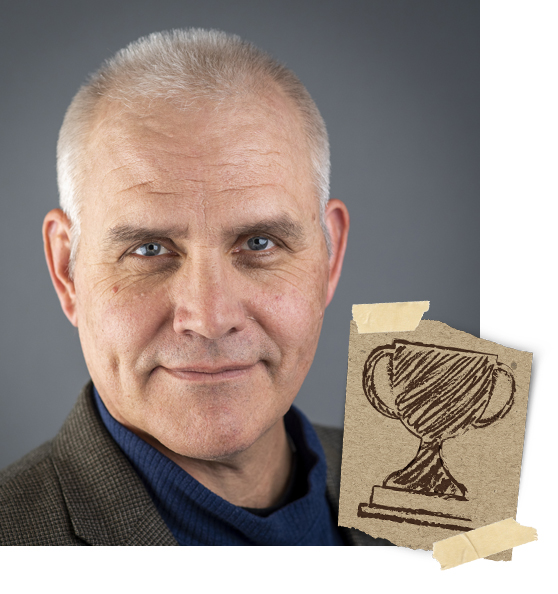
Dean Rehberger, our Access Champion for the month of August, spent over 17 years at the helm of Matrix: The Center for Digital Humanities and Social Sciences, a research center that primarily partners with universities, museums, libraries, archives, and world heritage sites to digitize, preserve, and provide public access to collections of cultural and historical materials. Much of the work being done through Matrix focuses on African History and the African diaspora.
Rehberger arrived at Michigan State with a strong foundation in American Studies and history of the West and post-Civil War America. He calls his involvement with Matrix and newfound focus on African Studies “more of an accident of fate, but it’s been a wonderful experience.”
“I’ve gotten to travel around the world and work with people under all different conditions, and it’s really helped me to see the kind of work that needs to be done to make things more accessible and readily available for people, and how we get this information out there,” he added.
This effort to make cultural heritage more accessible has been the driving force behind Rehberger’s work ever since. One major branch of Matrix is its project Enslaved: Peoples of the Historical Slave Trade, a discovery hub that links data from multiple universities, archives, museums and family history centers providing information about the lives of named enslaved and freed individuals. This database has compiled over a million records and given individuals the chance to trace their ancestry and discover their own history, while also educating the broader population and streamlining the research process for scholars.
“That’s what we are really doing here, is making a place for historians who go out and do this research to deposit their data so that other people can access it,” Rehberger said. “It not only enriches genealogy studies, but for us as historians, it enriches the ability to actually teach history.”
This uncovering of the humanist aspect behind this collection of data is something Rehberger is particularly passionate about. Enslaved.org serves not only as a hub for researchers to deposit the information they have pulled from the archives, but a place where they can actually attempt to make sense of this fragmentary information. “It gives historians a chance to know a lot more about people and movements and what happened to people who were enslaved before the Civil War, so that they can more accurately reconstruct their everyday lives and understand movements of people and events during that period,” he explained.
It is his hope that tools developed by Matrix and for Enslaved.org can help to untangle the complex web of American history, something that he sees as integral to painting the full picture of who we are. It also means not straying away from some of the darker parts of our history, like slavery. “To understand that history is to better understand ourselves,” he said.
Rehberger emphasizes that it has taken a village to create this expansive database. It has involved work not only with the exceptional researchers at Matrix and colleagues in the Department of History, but MSU as a whole and other partner universities and institutions worldwide. Taking advantage of resources like this and reading about the stories and experiences of individuals during this time is one way in which we can participate in the remembrance of the slave trade, he says.
“We often have very one-dimensional ideas of what happened to people under slavery, but we’re talking about people who were incredible scholars, writers, and artists, many of whom may have escaped, been sent to multiple plantations or made more than one trip across the ocean. This wasn’t a simple process. By reading the stories of these people, we not only understand the horribleness of slavery, but also the resilience of the human spirit and what people can do even in the worst of conditions.”
Honorees’ views are their own and do not necessarily reflect those of the College of Social Science.