This August, we recognize International Day for the Remembrance of the Slave Trade and its Abolition, celebrated each year on August 23. This honorary day commemorates the start of the Haitian Revolution, a 1791 uprising by enslaved individuals in the Caribbean which played a crucial role in abolishing the transatlantic slave trade. We also highlight individuals from the MSU community and beyond doing impactful work or research related to African history.
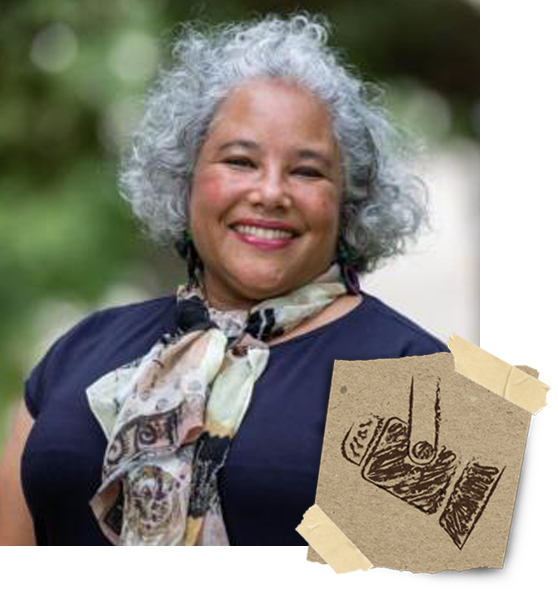
Our Access Spotlight for the month of August is Dr. Hilary Jones, an Associate Professor of History and African American and Africana Studies at University of Kentucky who teaches and researches about West Africa and its interconnected histories with Europe and the Americas.
For Jones, the desire to become a historian grew out of a greater curiosity about the world around her. She was assigned a project in French class at Cass Technical High School to research a francophone country outside of France, and chose Senegal. It was her first exposure to French West Africa and its culture, and she would go on to study abroad in Senegal her junior year of college. “That’s what really opened my eyes to this world of historical study,” she said.
Jones continued to expand upon her interests in African studies, the French Empire and colonialism and solidified her decision to major in history during her time at Spelman College. Through her studies both at home and abroad at the Université Cheikh Anta Diop in Dakar, Sengal, she began to understand where Africa fit in the context of world historical processes.
“I was able to better understand the place of the United States and the migration histories of Black Americans, including that of my own family’s, and I think a light bulb went on for me,” she explained. “I saw the way in which history brings both the local and the global together, and that’s what put me on the path towards pursuing advanced degrees in history and on the history of the African past.”
Jones learned about the renowned African Studies program at Michigan State through individuals at Université Cheikh Anta Diop who had collaborated with or read the work of Dr. David Robinson, University Distinguished Professor Emeritus in the Department of History and African Studies, whom she would go on to study with herself. “I’m also from Detroit; all those factors really made Michigan State the place that I should be to study Africa and link my combined interests on the continent of Africa with African American and African diaspora history,” Jones said.
During her time at Michigan State, Jones became more comfortable with the philosophy of history and frameworks that historians think through. She also took courses focused on Comparative Black History and the history of the transatlantic slave trade to help make better sense of the role of modern empire in World History. “At that time, a lot of what we were thinking about was how to research that deeper past,” she explained.
From there, her research developed into the study of African and Afro European identities and societies, the history of trade and commerce, slavery and the slave trade, and their many intersections. She is particularly interested in the beginnings of Afro-European heritage, mainly through African women entering conjugal unions with European men, and the ways in which this enabled them to function both within the French imperial structure and their own African culture and society.
“I’m interested in those questions of identity, but also the relationship of identity to politics, and how people who had ties to both of these worlds tried to navigate that,” Jones said.
Jones explains that learning about this history can aid us in better understanding the world’s colonial past and how the slave trade fits into the larger picture of our current world. “We are living through the effects of a world-making that began with the movement of people across the Atlantic in large measure because of the transatlantic slave trade,” she said. “This brought Africa, Europe, and the Americas into connection with one another economically, socially, culturally and politically in ways that they had not been intertwined before.”
It can also provide insight into some of our current political conversations. “It’s relevant now because we don’t have a full picture of what the modern history of immigration looks like unless we understand all these parts,” she explained. “We have a great deal of angst around immigration, migration, crossing borders, as a society. Reading about this history, I think, would give us a lot more compassion about the story of immigration and migration right now.”
Jones suggests that by taking action in these ways - “Learning more, being curious, and understanding,” - we can better reckon with the legacy of the slave trade and colonialism and its lasting effects on our opinions about race, racism, immigration, and even capitalism today. Seeking out information on both individual and group stories can aid in this.
“The notion of the individual as having a history and making that history more accessible is something that is of more recent interest to historians,” she said. “I do think the more we can personalize it, the better.” A few resources she suggests to begin expanding our knowledge during the Remembrance of the Slave Trade and its Abolition are the novels “Born in Blackness” by Howard French, “Abina and the Important Men” by Trevor Getz, and “Slaves for Peanuts” by Jori Lewis, as well as several documentaries including “The Language You Cry in,” Basil Davidson’s “AFRICA,” and “Prince Among Slaves.”
Honorees’ views are their own and do not necessarily reflect those of the College of Social Science.