This August, we recognize International Day for the Remembrance of the Slave Trade and its Abolition, celebrated each year on August 23. This honorary day commemorates the start of the Haitian Revolution, a 1791 uprising by enslaved individuals in the Caribbean which played a crucial role in abolishing the transatlantic slave trade. We also highlight individuals from the MSU community and beyond doing impactful work or research related to African history.
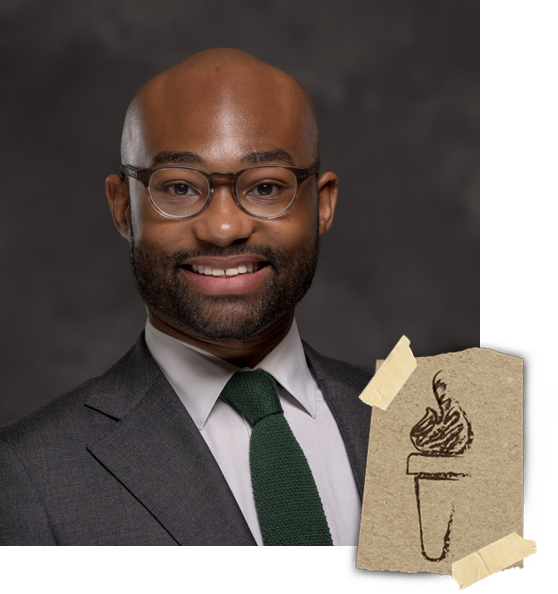
Our Access Torch for the month of August is Je’lon Alexander, a doctoral student in his third year in the Department of History. Alexander’s research covers a range of African American history with a particular focus on race, gender, and social movements. His doctoral research centers around the work of Dr. June Dobbs Butts, a pioneering sex therapist and the first African American to be trained by the prolific American human sexuality researchers team Masters and Johnson.
Alexander was first drawn to history in middle school, with several culturally relevant historical events occurring like the premiere of the HBO miniseries ‘John Adams’ and President Barack Obama’s election to office. History, he explained, has and always will be an important tool in understanding the context of where we are today. “It’s more than just facts and dates,” he said. “It’s understanding patterns, understanding humanity as a whole, and looking at how we can use history to make sure we don’t repeat our past mistakes.”
Alexander chose to attend Michigan State to continue his education after meeting Dr. LaShawn Harris, a professor in the Department of History and scholar of African American history, and others at a conference in 2019. Harris, along with faculty members like Drs. Pero Dagbovie, Glenn Chambers and Nakia Parker, helped Alexander to see the opportunities available at MSU. “I appreciate the support that is available for Black graduate students as well,” he added. “I’ve been able to find a community of Black graduate students on campus, and that has really made my time here as a PhD student worth it.”
When Alexander thinks about the importance of research like that of Dr. Butts in the 1970s and 80s, he thinks about the ways in which, despite all the advancements made by her and others, sexuality and bodily autonomy continue to be policed.
“My goal is to make sure that Dr. Butts’s work is well known, but also to ensure that when we talk about sex and sexuality, we apply it to what is going on politically and why it is so important that we don’t allow this policing,” he said. “We want to see people be able to choose and embrace their identity and choice of partners, because it’s what makes us human.”
Alexander’s research on human sexuality and the continued battle for acceptance has its own place among the study of freedom movements, such as the fights for abolition and civil rights, that have been going on for hundreds of years. There will always be more work to be done, he explained.
One important first step is making sure that history is told accurately, and that the United States acknowledges its past, even the parts that are uncomfortable to talk about. “We can’t sugarcoat history, because when we do, it delegitimizes the work historians are doing, and it’s important that we tell the truth in spite of certain groups trying to erase this part of our past,” Alexander said.
One way in which we can take part in the Remembrance of the Slave Trade and its Abolition as well as ongoing movements for civil rights is by getting involved with organizations focused on social activism and engaging with scholarship written about the history of freedom movements. For Alexander, it’s all about “being able to sit down and think about what we can do in terms of building a better community.”
“That’s what is really important, is that people do the work and engage with scholarship that has been written, and that they are doing their part to make sure people understand the true history of the United States and how all of this comes together.”
Honorees’ views are their own and do not necessarily reflect those of the College of Social Science.