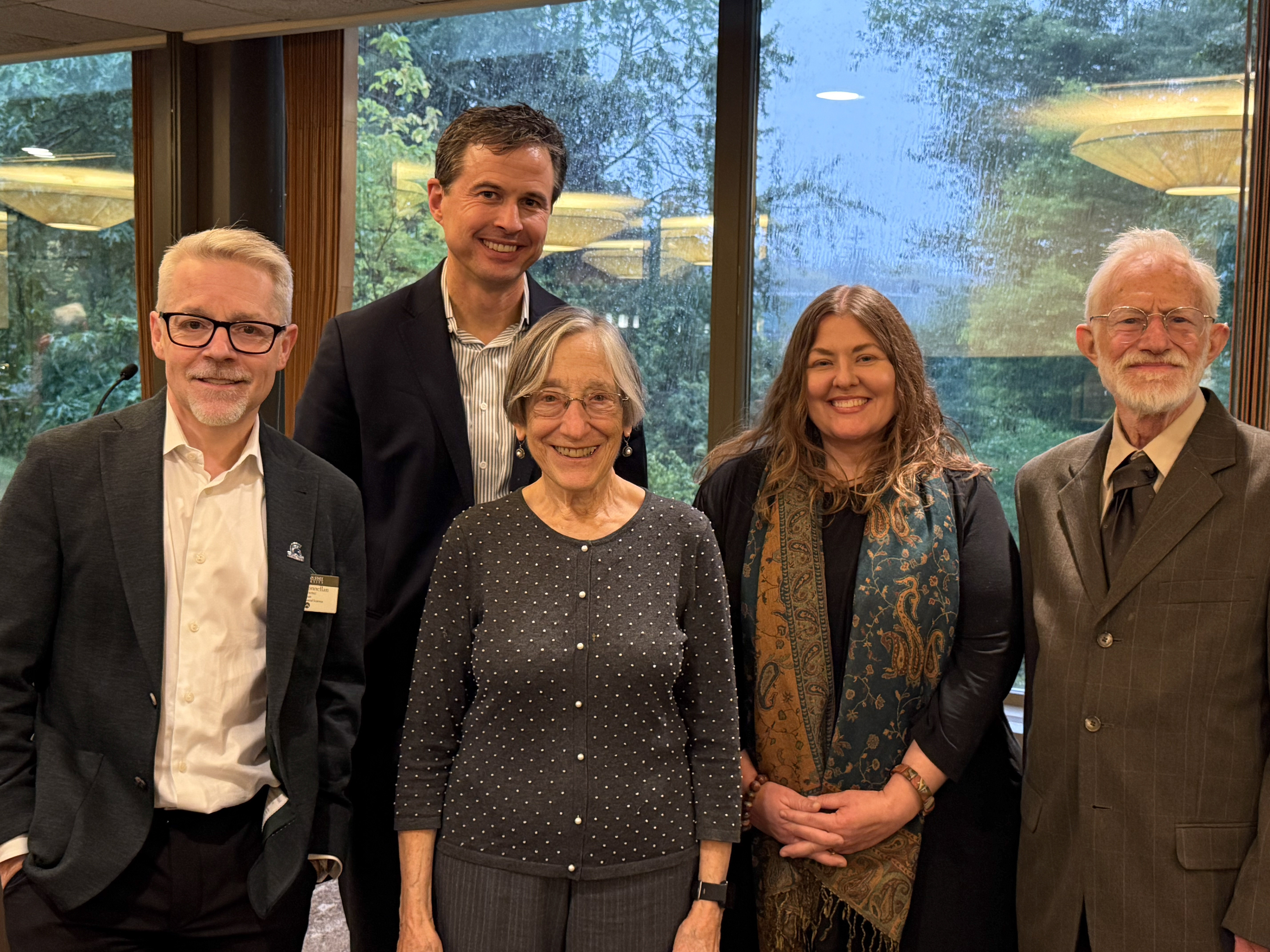
 Online misinformation happens but its impact isn’t nearly as broad or as pervasive as most people fear, according to this year’s Stan and Toba Kaplowitz Distinguished Lecturer.
Brendan Nyhan is the James O. Freedman Presidential Professor in the Department of Government at Dartmouth College and has been researching myths about misinformation. In this year’s lecture, he argued against ideas that most Americans are in online echo chambers, that false news and extreme content are widely consumed, that social media causes widespread harms and that fact-checking usually backfires.
“In each case, the conventional wisdom misunderstands the problem in ways that could undermine efforts to effectively address it,” Nyhan said. “There is a lot of misinformation about misinformation.”
Internationally over the last decade, concerns have risen over the ways technological development like social media and AI impacts factors like increased political polarization. While these fears are real, they are far from new, Nyhan said.
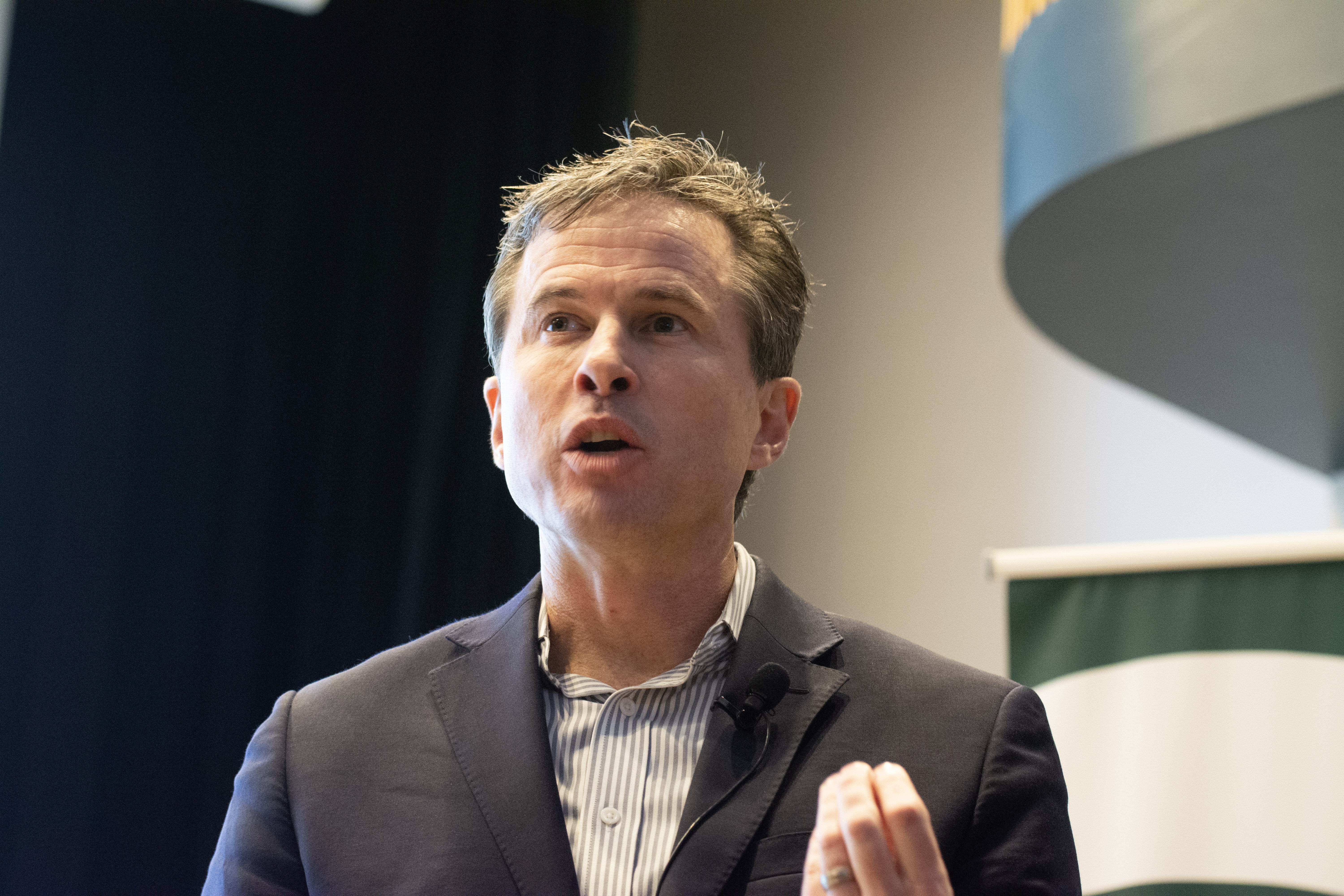 “People feared this would happen when TVs became popular and before that radio, and even the printing press,” Nyhan said. “People have always said things are getting worse, and there was this kind of golden age in the past. You should be very suspicious of that kind of stuff from older people. It’s insufferable.”
Nyhan defines misinformation as false and unsupported claims - different from disinformation which is a deliberate, malicious effort to spread lies. He studied where people get their news from digital behavior data because most people overreport where and how often they pay attention to news coverage.
“In the most extensive social science study of this type conducted during the 2020 elections, where we varied exposure to different kinds of content, we found minimal effects on people’s beliefs and attitudes,” Nyhan said.
“When we changed the composition of what we saw on social media, we saw no evidence that changing their information diet in important ways had effects on their attitudes or beliefs.”
 Instead he finds that the people who receive information from the most extreme sources are those who already have values and beliefs that align with the misinformation presented by those sources. So there is little to no evidence that this misinformation changes their views or their voting behavior.
“These are relatively small numbers of people with relatively extreme values consuming the majority of extreme content,” he said. “We found 1.7 percent of users responsible for 80 percent of the time spent viewing alternative videos YouTube. The number for extremist shows was even higher, around 90 percent.”
Nyhan also found that fact-checking does not cause people to double down on wrong information or belief. Instead, it does get them to change their minds – but only briefly. He tested people in the United States and Great Britian in four waves asking them about COVID misinformation . The subjects were given correct information and tested their beliefs. The first re-survey showed the subjects now shared the correct information but when they were asked a third and fourth time, they had reverted to believing in the misinformation even though they knew it was wrong.
“A really important challenge is not that people are rejecting correct information at the moment,it is that the effects aren’t lasting,” Nyhan said. “An additional complication that makes effective fact changing at scale really difficult is reaching the audiences that might most benefit from exposure to that information.”
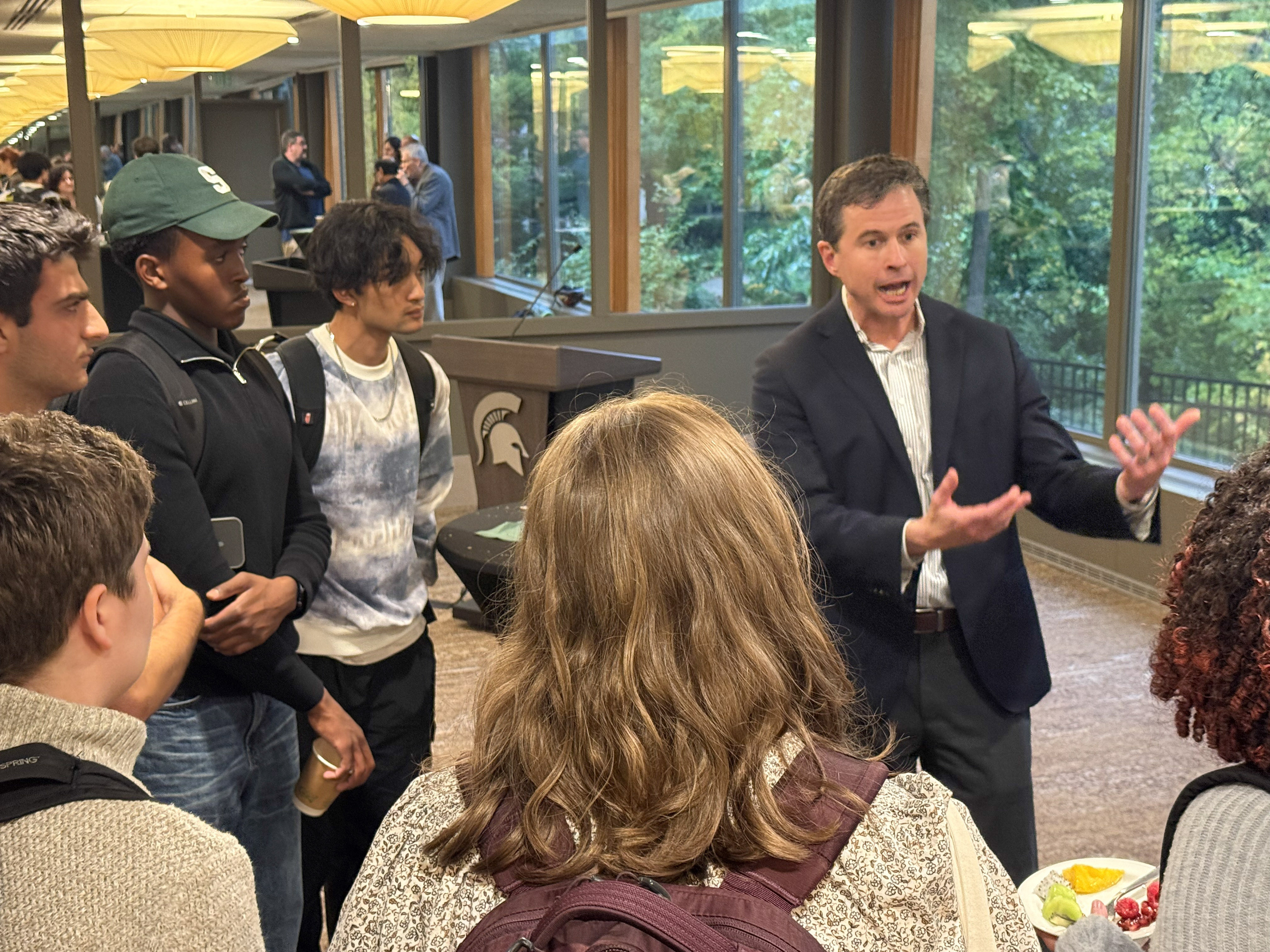 A solution lies in each person taking the responsibility to be a credible source and sharing accurate information with the people who are closest to them, who trust them and who view them as a leader.
“In your own life, think about for whom you are a credible source – your friends, your family, folks you work with, folks you go to school with,” Nyhan said. “Those are the people you can help in a respectful, generous way.”
Also a former Professor of Public Policy at the University of Michigan, Nyhan is a member of the American Academy of Arts and Sciences and a former Guggenheim Fellow and Carnegie Fellow. He is co-director of Bright Line Watch, a watchdog monitoring the status of American democracy; a former contributor to The Upshot at The New York Times; co-founder of Spinsanity, a non-partisan watchdog of political spin syndicated in the Philadelphia Inquirer; and co-author of All the President's Spin, a New York Times bestseller.
Sociology Professor Emeritus Stan Kaplowitz and his wife, Toba, created the Stan and Toba Kaplowitz Distinguished Lecture Series in 2024 with their inaugural lecture by renowned environmentalist Robert Bullard. Last year, MSU Sociology Distinguished Professor Emeritus Tom Dietz, a member of the National Academy of Sciences, presented the second lecture.